Decades of Science vs. 10 Pages of Policy: A Dietitian’s Critique of the New Food Pyramid and 2026 Dietary Guidelines
Published: 01/12/2026
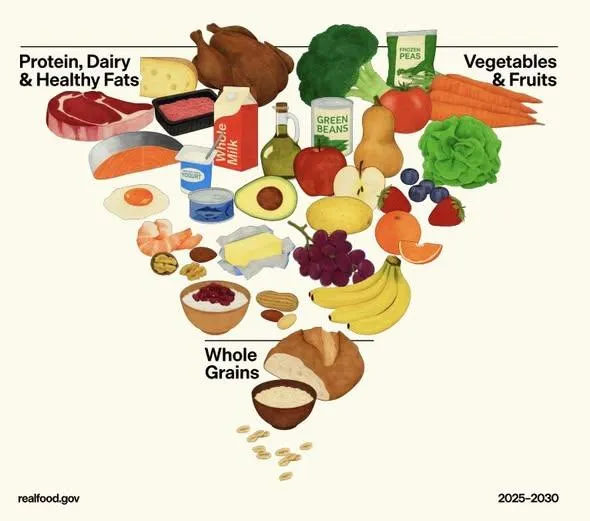
The 2026 Dietary Guidelines have officially arrived, and as a Registered Dietitian, I find the shift deeply concerning. While the update includes some positive changes, it represents a significant departure from decades of established cardiovascular and metabolic science. Later in this article, I will break down exactly which components of these new guidelines align with evidence-based practice.
The Graphic Gap: Visual Misleading vs. Technical Text
A glaring issue with the new guidelines is the massive inconsistency between the written policy and the inverted pyramid graphic provided to the public.
There is a striking disconnect between the 2026 written guidelines and their visual representation. On paper, the 10% cap on saturated fat remains intact; however, the new inverted pyramid prominently displays red meat, butter, and tallow at the top. This creates a false equivalency that suggests these animal fats are as 'foundational' as heart-healthy plant oils, potentially leading consumers to overlook the established risks of high saturated fat intake.
Scientifically, it is nearly impossible for the average person to follow the pyramid’s visual cues without "blowing through" the 10% saturated fat cap mentioned in the text. This "policy vs. picture" disconnect creates a heart-health trap, as high-saturated-fat patterns drive elevated ApoB and LDL cholesterol—the primary drivers of arterial plaque.
Furthermore, by visually de-emphasizing whole grains by placing them at the bottom of the pyramid, the guidelines strip away the specific viscous fibers (like beta-glucans) that act as a "metabolic sponge" to sweep cholesterol from the bloodstream.
Strategic Omissions and Processing Double Standards
Even more concerning is what the pyramid leaves behind:
- The Invisible Plant Protein: While the text technically mentions meatless options, the graphic relegates legumes, lentils, and soy to the background in tiny, barely visible portions.
- Guidance on Healthy Fats: The new guidelines lack clear emphasis on the proven benefits of unsaturated fats. As an RD, I continue to recommend heart-healthy options like canola, olive, and avocado oils for their well-documented cardiovascular benefits.
- Processing Inconsistency: The guidelines recommend butter and olive oil as "real food" but ignore cold-pressed oils, which undergo the exact same level of processing as extra-virgin olive oil.
- Missing Alternatives: Fortified dairy alternatives like soy milk are entirely ignored, failing the millions of Americans who are lactose intolerant or choose plant-forward diets.
- Vague Alcohol Policy: The guidelines have removed the specific quantitative cutoff for alcohol. Replacing clear limits with the phrase "drinking less is better" is a dangerous step backward for cancer and metabolic health prevention.
The "Corporate Capture" Paradox
The administration dismissed previous experts under the guise of "ending corporate capture," yet the new committee features members with direct financial ties to the beef and dairy industries. The guidelines even open with a letter stating a goal to "support farmers and ranchers." As an RD, I believe dietary guidelines should be based strictly on human health—not the financial interests of industry lobbyists. This influence is clearly reflected in a graphic that highlights large slabs of red meat while relegating heart-healthy plant proteins to the background.
Protein Adequacy: Supporting Muscle Health without Sacrificing Balance
The move to 1.2 to 1.6 grams of protein per kilo of body weight is a shift I fully support. There is robust evidence that higher protein intake is critical for both muscle growth and the prevention of muscle loss (sarcopenia) as we age. However, the source of that protein matters immensely for long-term wellness.
While I advocate for these higher protein targets, I am concerned by the guidelines’ visual and structural bias. The new inverted pyramid prominently features animal-based foundations, while heart-healthy meatless protein options—like legumes, lentils, and soy—are significantly downplayed. This is a missed opportunity, as these plant-based proteins provide the antioxidants, phytonutrients, and fiber that animal products completely lack.
To maintain cardiovascular and metabolic health, protein should not displace the nutrients found in plant-based whole foods. Achieving your protein goals should be a balance: hitting your 1.2–1.6g/kg targets while ensuring that fruits, vegetables, and fiber-rich grains remain the centerpiece of your plate to protect your heart and gut.
The Mediterranean "Demotion"
For decades, the Mediterranean Diet—rich in olive oil, legumes, nuts, and fish—has been the gold standard for reducing cardiovascular and cancer risk. However, in the 2026 update, this pattern has been effectively demoted. By moving away from plant-forward foundations and toward a beef-and-butter model, the guidelines have sidelined the very eating pattern that has the most robust evidence for longevity.
Clinical Leaders Issue Formal Statements
Leading medical and nutritional authorities have issued formal statements warning that these guidelines represent a dangerous departure from evidence-based medicine.
1. The American Heart Association (AHA) / American College of Cardiology (ACC) The AHA/ACC warn that rebranding butter and tallow threatens cardiovascular safety. They argue the 10% saturated fat cap is rendered meaningless if high-fat animal products are promoted as foundations.
2. The Obesity Society (TOS) criticized the "Common Sense Nutrition" branding for treating a complex biological disease as a simple lifestyle choice. They flagged the failure to integrate evidence-based medical care, including GLP-1 medications.
3. The Academy of Nutrition and Dietetics (AND) The Academy stated this version will make "protecting public health difficult." They flagged the total exclusion of dairy alternatives and expressed concern over the "moderation" stance on synthetic dyes and sweeteners.
4. The Physicians Committee for Responsible Medicine (PCRM) argues that the guidelines "unjustly condemned highly processed foods while exonerating animal products," noting that both contribute to chronic disease markers.
5. The American Medical Association (AMA) The AMA is launching its own clinical resources to provide doctors with the "hard numbers" the guidelines removed—specifically regarding alcohol limits.
6. The Center for Science in the Public Interest (CSPI) claims the government ignored its own 2025 Scientific Report in favor of industry lobbyists, noting a major policy "U-turn" that promoted animal products over expert-recommended plant-forward patterns.
7. Harvard T.H. Chan School of Public Health Leading researchers flagged the "Fiber Gap," noting that following this protein-heavy, animal-based diet makes it nearly impossible to meet the required 25–38g of daily fiber.
8. The American Diabetes Association (ADA) flagged that a diet foundational in animal fats can exacerbate insulin resistance and criticized the de-emphasis of whole grains and legumes.
9. The American Academy of Pediatrics (AAP) took a harder stance on synthetic dyes (like Red 40 and Yellow 5), citing direct evidence of behavioral issues and hyperactivity in children.
10. American Institute for Cancer Research (AICR) expressed "profound concern" over the link between increased red meat consumption and colorectal cancer, as well as the removal of quantitative alcohol limits.
Points of Agreement
There are areas where these guidelines align with evidence-based practices and provide helpful tools for the consumer:
- The War on Ultra-Processed Foods (UPFs): A necessary and aggressive stance against "industrial" food formulations and highly refined snacks that drive overconsumption.
- Zero Tolerance for Added Sugars: A clear win for diabetes prevention and metabolic health, maintaining a strict limit on hidden sweeteners.
- Salt Management: Maintaining the evidence-based cutoff of under 2,300 mg of sodium daily to protect blood pressure.
- The "Home Cooking" Mandate: Encouraging a return to the kitchen. By preparing meals from scratch, consumers naturally avoid the "Big Food" additives that drive inflammation.
- Muscle Health as a Priority: For the first time, the guidelines explicitly prioritize muscle protein synthesis and the prevention of sarcopenia (age-related muscle loss) by increasing the protein RDA.
- Life-Stage Specificity: The 2026 update provides much clearer guidance for specific life stages, particularly for pregnant women and the elderly, acknowledging that nutritional needs are not static throughout life.
- Transparency on Additives: While the "moderation" language is weak, the guidelines do successfully flag the need for consumers to be more aware of synthetic dyes and non-nutritive sweeteners, moving the conversation toward "cleaner" ingredient labels.
The Path Forward: Evidence-Based Care
While federal graphics and guidelines may shift with the political tide, the foundation of nutritional science remains steady. In an era of confusing visual cues and industry-driven updates, Registered Dietitians remain the gold standard for evidence-based nutrition. We provide the clinical expertise necessary to translate complex, generalized science into the personalized, life-saving care that a one-size-fits-all framework simply cannot provide.
To protect your long-term wellness, I recommend following the robust benchmarks established by decades of clinical study. These standards are designed not just for disease prevention, but to maximize your longevity and healthspan—ensuring you remain vibrant and active well into your later years.
- Prioritize the Mediterranean Model: This pattern remains the most research-backed in history for promoting longevity. Don’t let legumes, lentils, and whole grains take a backseat. These fiber-rich foods are your primary defense against the chronic diseases that can undermine your vitality and shorten your healthy years.
- Prioritize All Plant Foods: Don't let legumes and grains take a backseat. Aim for 25–38g of fiber daily. Fiber is your primary defense against colon cancer and high cholesterol.
- Limit Red Meat to 12–18 oz per week and avoid processed meat entirely due to the evidence of colorectal cancer risk.
- 2/3 of your plate should be plant-based (veggies, grains, beans) and only 1/3 or less should be animal protein. This is the direct opposite of the "Inverted Pyramid" that prioritizes animal fats and proteins.
- Ignore the "One-Size-Fits-All" Narrative: A ten-page government document cannot account for your unique genetic blueprint, your specific lipid markers (like ApoB), or your gut microbiome. Personalized nutrition is the key to extending your healthspan.
- Hit Your Protein Targets: Support your muscles with 1.2–1.6g/kg of protein. Diversify your sources to include beans, lentils, and soy to ensure you aren't over-consuming the saturated fats found in the "foundational" animal products.
- Use Healthy Oils: Continue using heart-healthy unsaturated fats like olive, avocado, and canola oil. These remain the gold standard for maintaining healthy cholesterol levels and supporting brain health as you age.
- Limit Alcohol: Since the guidelines removed quantitative limits, stick to the clinical standard: no more than one drink per day for women or two for men. Reducing alcohol is one of the most effective ways to protect your cognitive healthspan and lower cancer risk. (Be aware that the American Institute for Cancer Research (AICR) notes there is no truly "safe" amount. If you have a high family risk for cancer, the best choice is zero).
- Master Sodium: Keep intake under 2,300mg/day. Since the guidelines encourage "real food," use herbs and spices to flavor home-cooked meals instead of salt.
- Added Sugars: Aim for less than 10% of total calories. While the guidelines took a hard stance here, remember that "natural" sugars in whole fruits are not the enemy.
- Children’s Health: Be a label detective for synthetic dyes. Red 3 being a known carcinogen and for others: Red 40, Yellow 5, Yellow 6, Blue 1, Blue 2, Green 3, the concern is not that the dye itself is a carcinogen, but that it may be contaminated with low levels of carcinogens like benzidine during the manufacturing process.
- The link between synthetic dyes and neurobehavioral issues is now well-documented. Leading organizations, including the American Academy of Pediatrics and the California OEHHA, have confirmed that these can trigger or exacerbate hyperactivity and inattention in sensitive children. This consensus recently culminated in the landmark 2026 phase-out of the 'Big Seven' dyes: Red 3, Red 40, Yellow 5, Yellow 6, Blue 1, Blue 2, and Green 3.
The Bottom Line: As your RD, I am the expert in your corner to provide the clinical context these guidelines miss. Let's build a plan that works for your unique biology, not an industry-driven pyramid.
Connect with Me!

Maria Faires, RD
Ready to take the guesswork out of your health? True wellness is built on a foundation tailored specifically to your body and your goals.
If you’re looking for a strategy that goes beyond the basics, I’d love to help. Contact me today to learn more about my 1-on-1 individualized coaching plans, where we’ll work together to optimize your nutrition and immune resilience.
For more daily RD-approved tips, recipes, and science-backed health hacks, let’s stay connected:
Clinical Resource References
Cardiovascular & Metabolic Standards
The American Heart Association (AHA): Scientific Statement on Dietary Fats and Cardiovascular Disease. This remains the definitive evidence for maintaining a 10% saturated fat cap and the relationship between ApoB and heart health.
The American Diabetes Association (ADA): Standards of Care in Diabetes. These standards highlight the importance of whole grains and legumes in managing insulin sensitivity and the dangers of high animal-fat patterns.
National Lipid Association (NLA): Clinical Perspective on ApoB and Particle Count. A technical breakdown explaining why the number of particles (ApoB) is a more accurate predictor of heart disease than standard LDL weight.
Cancer Prevention & Additives
American Institute for Cancer Research (AICR): Diet, Nutrition, Physical Activity, and Cancer: A Global Perspective. This report provides the benchmark for limiting red meat to 12–18 oz per week and the "no safe limit" stance on alcohol.
The American Academy of Pediatrics (AAP): Policy Statement on Food Additives and Child Health. The primary clinical source documenting the behavioral effects of synthetic dyes (like Red 40 and Yellow 5) on sensitive children.
California OEHHA: Health Effects Assessment of Synthetic Food Dyes. The landmark 2021/2026 review that confirmed the link between food dyes and neurobehavioral issues.
Longevity & Protein Science
Harvard T.H. Chan School of Public Health: The Nutrition Source. A comprehensive review of the "Fiber Gap" and why high-fiber plant foods are foundational for longevity.
The Journal of Nutrition, Health & Aging: Protein Intake and Muscle Preservation. The peer-reviewed basis for the 1.2 to 1.6 g/kg protein recommendation to prevent age-related muscle loss (sarcopenia).
Oldways Cultural Food Traditions: The Mediterranean Diet Pyramid. The original, evidence-based visual model for plant-forward eating, emphasizing olive oil, legumes, and whole grains as the true foundation of health.