Why I Chose a Luxury Wildlife Conservancy for My Kenya Safari — And Why You Should Too
Published: 04/15/2026
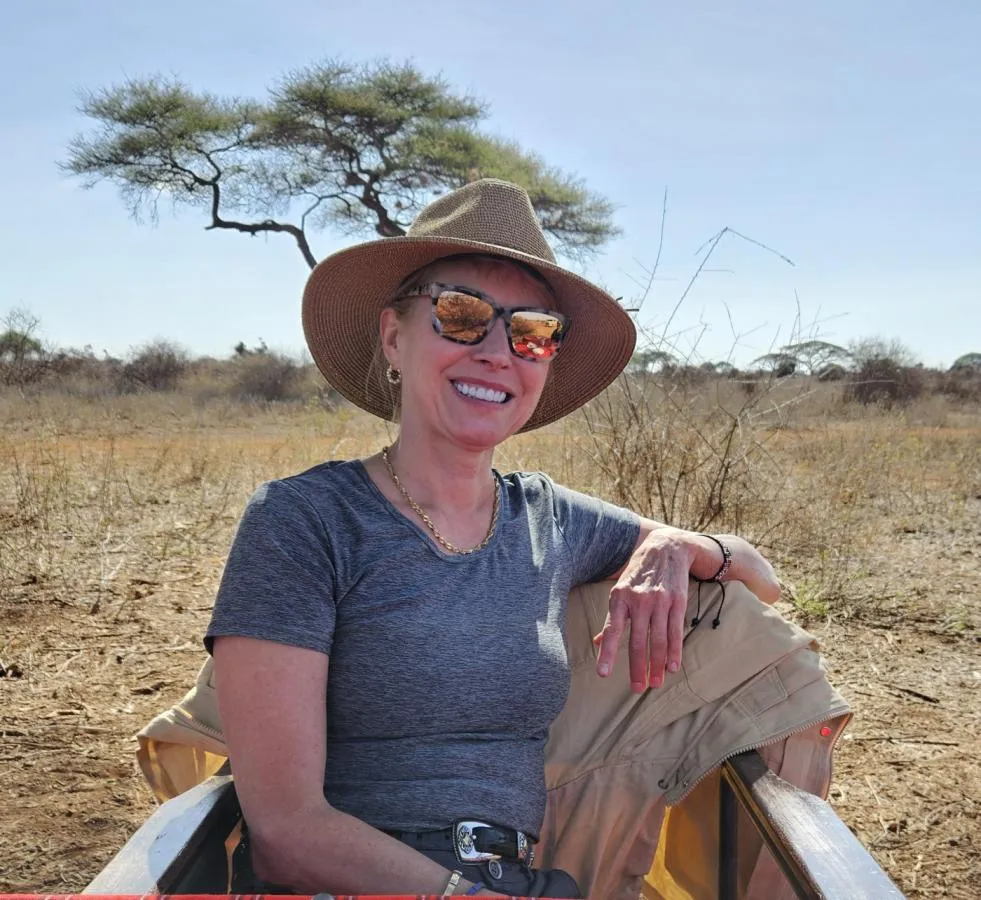
Maria Faires Where Is Maria Adventure Travel in Kenya on Luxury Safari
When most people think about an African safari, they picture the Maasai Mara or the Serengeti — iconic, bucket-list destinations that absolutely deserve their reputation. I thought the same thing. Until I went to Kenya and discovered that the most extraordinary wildlife experiences aren't happening in the famous parks at all.
They're happening in the private conservancies. And most travelers don't even know they exist.
I just returned from Kenya, where I stayed at three incredible properties — Tawi Lodge in the Tawi-Kilitome Conservancy near Amboseli, Lewa Wilderness Conservancy and &Beyond Kichwa Tembo Tented Camp on a private concession where the Oloololo Escarpment meets the Mara plains near Maasai Mara. This trip of a lifetime were organized through Rothschild Safaris, a luxury travel agency that specializes in exactly this kind of expedition-level planning.
I want to tell you what I found — and why I think a private conservancy should be on your radar if you are seriously considering a Kenya safari.
What is a Wildlife Conservancy?
A conservancy is a protected wildlife area managed through a partnership between local communities — most often Maasai or Samburu families — and boutique safari operators. Unlike government-run national parks, these are private lands where local families lease their ancestral territory to a conservation trust.
In return, those families receive a guaranteed monthly income and priority employment. Their land becomes an asset rather than a burden, and they become its primary guardians.
The wildlife stays. The habitat stays. And the experience you have as a visitor is completely different from anything a public park can offer.
Why a Conservancy is a Different Experience Entirely
Let me be direct about something. I have been to extraordinary places. I am a licensed Boat Captain. I have navigated remote coastlines and anchored in hidden coves that most people never find. I approach every expedition the way I approach provisioning a boat — strategically, with research, and with a clear understanding of what I want from the experience.
What I wanted from Kenya was wildlife on its own terms. Unhurried. Unobstructed. Real.
Here is what a private conservancy gives you that a national park simply cannot:
Crowd-free sightings. In the main reserves, a lion sighting can attract a dozen or more vehicles within minutes. In a conservancy, vehicle numbers are strictly capped. At Tawi, Lewa and Kichwa Tembo, I was regularly one of only two or three vehicles at a sighting. Most times, the only one. That changes everything about how you observe, how you photograph, and how you feel in that moment.
The freedom to go off-road. In national parks, guides must stay on designated roads. In a conservancy, guides can legally track off-road — following a leopard through the brush, positioning you for the perfect angle, staying with an animal as it moves through terrain that a road would never reach. This is not a small thing. It is the difference between watching wildlife and truly being in it.
Night game drives. Park gates close at sunset. Conservancy guests stay out after dark. With filtered spotlights, you can witness hyenas, honey badgers, leopards, and elusive nocturnal species that you would never encounter on a standard daytime drive. Some of my most extraordinary moments happened after the sun went down.
Walking safaris. While most national parks restrict you to the vehicle, private conservancies offer the exclusive freedom to step onto the earth and explore the wild on foot alongside expert Maasai or Samburu rangers. It is here that a walking safari transforms the observer into a participant.
There is a profound psychological shift the moment your boots hit the dust and the engine cuts out. Stripped of the vehicle’s protection, your relationship with the bush completely recalibrates, and your senses sharpen to a prehistoric edge. You begin to notice the micro-stories of the landscape that are missed entirely from a seat: the weight of a fresh track, the frantic click of insects, and the subtle, shifting scent of the air.
When you are walking, you aren’t just looking at the wild; you are standing within it, vulnerable and vibrantly alive. It is a humbling intimacy—an honest, raw encounter with the bush that you simply cannot experience from behind a pane of glass.
Tawi Lodge — Gateway to Giants
Tawi Lodge sits within the 6,000-acre Tawi-Kilitome Conservancy, just five minutes from Amboseli's Kimana Gate. This community-run corridor protects vital migration routes for Amboseli's famous elephant population—including the legendary Super Tuskers, some of the last great-tusked elephants on earth.
Staying at Tawi, you truly get the best of both worlds: the intimacy and freedom of a private conservancy combined with swift access to one of Kenya’s most unique national parks. The wildlife is exceptional, and for those who appreciate exotic birdlife, the diversity here is a standout. The property features 13 individual guest cottages, each designed with a spectacular, unobstructed view of Mt. Kilimanjaro.
My stay at Tawi was one of the most grounding experiences of my life, defined by a sense of deep peace that started the moment I opened my eyes. Each morning began in the quiet stillness of the savanna as trays of hot Kenyan coffee and cookies were brought directly to our cottage—the perfect, gentle wake-up call before the excitement of a morning game drive. And the game drives were nothing short of breath-taking; we saw many, many elephants, some passing so close to our vehicle that it felt as though you could almost reach out and touch them.
Between adventures, the swimming pool and sunbeds on the wooden decks offer a front-row seat to the waterhole, where the wildlife comes to you while the lawn bustles with 'resident Pumbas.' One of the most fascinating ways we experienced this land was during a nature walk accompanied by an experienced guide and two armed rangers. Moving on foot allowed us to see the landscape from a completely different perspective, noticing the smaller details of the bush that you miss from a vehicle. The walk ended perfectly at a fireside happy hour, where a Maasai man served us delicious appetizers and drinks as the sun began to set.
That evening turned into a truly delightful international connection later at the bar. We shared stories and laughter with a family from Brazil; despite their limited English, we found plenty of common ground. It was a beautiful moment of cultural exchange that culminated in the men playfully trading hats—my husband and the father from Brazil exchanged baseball caps as a souvenir of our shared time in the wild.
The lodge is beautifully designed, the food was extraordinary, and the conservation mission is woven into every part of the operation. Your stay directly supports the Maasai landowners whose families have managed this landscape for generations.
Amboseli / Tawi Lodge: The Land of Giants
This area is all about Elephants. Because of the high water table from Kilimanjaro’s runoff, the swamps are a magnet for massive herds.
• The Headliners: Massive "Super Tusker" Elephants (some of the last in the world), large buffalo herds, and hippos in the Enkongo Narok swamps.
• The Supporting Cast: Spotted hyenas, Maasai giraffes, zebras, and blue wildebeest.
• Birdlife: Over 400 species, including Flamingos (in the seasonal Lake Amboseli), Pelicans, and Kingfishers.
Kichwa Tembo — Front Row to the Great Migration
&Beyond Kichwa Tembo Tented Camp is located on a private concession where the Oloololo Escarpment drops into the Mara plains—a strategic position that gives you front-row access to the Great Migration. The camp sits at the edge of one of the most dramatic landscapes in Africa, where panoramic views and intimate wildlife encounters meet legendary Kenyan warmth. From the moment you arrive, you are swept up in this energy; the staff greets you with vibrant singing and the rhythmic beat of drums, a tradition that makes your welcome feel like a true homecoming.
What sets Kichwa Tembo apart is the combination of location and access. The escarpment creates a natural funnel for animal movement, and the wildlife density here is remarkable. Because it is a private concession, off-road tracking is permitted, and night drives reveal what the daytime only hints at. Steeped in the aura of a traditional safari, the camp blends nostalgia with a crisp, modern style that is designed to feel like home.
We stayed in a Superior Tent, a luxurious hybrid of canvas and permanent structure that offers the best of both worlds. One of my favorite logistical details was the 'butler door,' where hot coffee and cookies were delivered every morning before our game drive without disturbing our privacy.
The culinary experience was just as thoughtful; a gorgeous bar set with snacks in the afternoon, the split-level dining area centers around an interactive kitchen and a thriving shamba (vegetable garden), and we experienced magical dinners where tables were set on the lawn under the glow of lanterns.
From the generous swimming pool tucked beneath shady trees to the weekly traditions—including a powerful evening where the Maasai came to dance and sell their handcrafts—the hospitality was world-class. The Kenyan staff were exceptionally warm and welcoming, ensuring that every moment felt authentic. Even as we prepared to leave, the staff gathered once more to sing and play the drums, a soulful send-off that echoed across the plains.
Your stay here maintains a critical buffer zone that keeps the western Mara wild, directly supporting the conservation of this iconic landscape.
Masai Mara / Kichwa Tembo: The Big Cat Capital
The Mara is the "classic" Africa. The high density of plains game (food) means the predators are everywhere.
• The Headliners: The Big Three Cats (Lion, Leopard, and Cheetah). The "Marsh Pride" of lions is world-famous here.
• The Great Migration: From July to September, the plains are carpeted in 1.5 million Wildebeest and hundreds of thousands of Zebras.
• The River Giants: Massive Nile Crocodiles and pods of Hippos in the Mara River.
Lewa Wilderness — The Pioneer of Conservation
Lewa Wilderness Lodge is the original heart of the 65,000-acre Lewa Wildlife Conservancy, a UNESCO World Heritage site and a global gold standard for wildlife protection. This is one of the few places on Earth where you can see the recovery of a species in real-time; Lewa is a world-renowned sanctuary for the endangered Black and White Rhino and the rare Grevy’s Zebra.
What makes a stay at Lewa Wilderness so distinct is the deep, multi-generational history of the Craig family, who have stewarded this land for nearly a century. When you arrive at the lodge, you immediately feel like you’re with family. Just nine exclusive rooms dot the landscape: six cottages tucked into the hillside and three expansive garden cottages. We could see wildlife directly from our room—a constant reminder that this isn't just a lodge; it is a vital fortress for biodiversity.
Because it is a private conservancy, the boundaries of a traditional safari disappear, and the logistics of your exploration expand far beyond the vehicle. We stepped out of the Land Rover to experience the rugged terrain from a completely different vantage point—exploring the landscape on camelback and through incredible horseback safaris.
One of the most impactful parts of our stay was going "behind the scenes" to see how the conservancy truly functions. As a Registered Dietitian, I was fascinated by our tour of their massive organic garden. They grow nearly all their own produce, raise their own chickens, and even have a sustainable fish farm on-site. This level of self-sufficiency ensures that the world-class, family-style dinners we enjoyed were as fresh and nutrient-dense as possible.
Tucked away at the Lewa Headquarters is a true 'mission control' for wildlife. We were introduced to the Joint Operations Centre—a high-tech nerve center where the team utilizes the Domain Awareness System (DAS) to monitor the entire 62,000-acre landscape in real-time. It was fascinating to see how they integrate digital field reports with satellite tracking to stay one step ahead of security threats.
Seeing that cutting-edge technology paired with the raw instincts of the Dog Unit was unforgettable. We spent time meeting the K9 anti-poaching trackers—true four-legged heroes—and even got to help with their feeding. Witnessing their rigorous training firsthand was an incredible reminder of the specialized skills and dedication required to protect Kenya’s most vulnerable wildlife. It showed us exactly why Lewa remains a global leader in rhino and elephant protection.
We also took a birdwatching nature walk with an exceptionally experienced guide who helped us navigate the hundreds of species that call this area home.
The craftsmanship here is also remarkable—we toured the on-site workshop where local artisans hand-make every piece of furniture and doors for the lodge. It’s a true labor of love that supports the local economy.
Every moment spent here contributes directly to the security and community programs that keep this wild corridor thriving. Against the backdrop of Mount Kenya, Lewa is a magical "home-away-from-home" experience that is truly hard to find these days.
Lewa Wilderness: The Rhino Stronghold
Lewa is world-famous as a sanctuary. If you want to see a Rhino, this is the gold standard.
• The Headliners: Black and White Rhinos (Lewa holds 12% of Kenya’s black rhino population) and the Grevy’s Zebra (the world's largest single population lives here).
• The "Northern Specials": Look for animals you won't see in the Mara, like the Reticulated Giraffe, the Beisa Oryx, and the Somali Ostrich.
• The Predators: Healthy populations of lions, leopards, and occasionally the very rare African Wild Dog.
Why I Used Rothschild Safaris
The Logistics of Luxury: Why Expertise Matters
Planning a safari at this level is not something I would do without expert guidance—and I say that as someone who plans complex expeditions for a living. The logistics of a conservancy safari are anything but simple. Getting the right camps in the correct sequence, navigating the nuances of conservancy permits, and identifying which operators have genuine conservation commitments versus those who simply market the words requires a specialist.
Rothschild Safaris handled every technical and logistical detail. They took the lead on the entire lodge and bush plane booking process, ensuring that our transitions between Lewa, Amboseli, and the Mara were perfectly timed. From the moment we touched down, the transition was effortless. Rothschild Safaris utilizes an elite network of on-the-ground specialists who managed every arrival and transfer with white-glove precision. We were met by dedicated airport concierges who whisked us through security, handled our luggage, and escorted us to curated local restaurants while we waited for our bush flights.
We were never left wondering about the next step in our journey; we were simply guided through it. This level of 'boots on the ground' support—including a dedicated 24/7 contact number for real-time coordination—is exactly the kind of logistical excellence I value. It allowed me to step off the plane and immediately shift from 'navigator' to 'adventurer,' knowing the helm was in expert hands.
Beyond the itinerary, they provided the essential "pre-trip" preparation we needed to arrive informed and ready. They even provided a dedicated contact number for us to call at any time if an issue arose—a level of support that is invaluable when you are in remote regions. Their intimate knowledge of these camps meant our itinerary was designed specifically for how I travel.
The value of that expertise is impossible to overstate. Because Rothschild Safaris managed the heavy lifting of the logistics, I was able to be fully present for every extraordinary moment of the experience. If you are seriously considering a Kenya safari—especially one based in the private conservancies—I would not book it any other way.
A Safari With a Purpose
I want to say one more thing about why this matters beyond the experience itself.
Choosing a conservancy means your travel footprint leaves a genuinely positive mark. Your stay directly funds the land leases for local families — providing sustainable income and making wildlife protection economically viable for the communities who live alongside it. You are not just a tourist. You are a direct investor in conservation.
As someone who advocates for whale conservation and has spent years thinking about the relationship between humans and wild animals, that matters deeply to me.
We protect what we love. And spending time in a place like this — truly in it, not just passing through — creates the kind of love that lasts.
Shop Women Safari Items on AmazonReady to Plan Your Own Kenya Conservancy Safari?
Start with my complete safari packing guide — coming soon to my Etsy shop at mariafairesdietitian.etsy.com. And browse my curated Safari Essentials for Women and Safari Essentials for Men in my Amazon storefront — every item researched, vetted, and held to my standards.
Link in bio for everything. Pack with intention. The wild world is waiting.
Shop Men's Safari Items on AmazonAbout Maria Faires, RD • Adventure Travel • Pack with intention • Explore beautifully
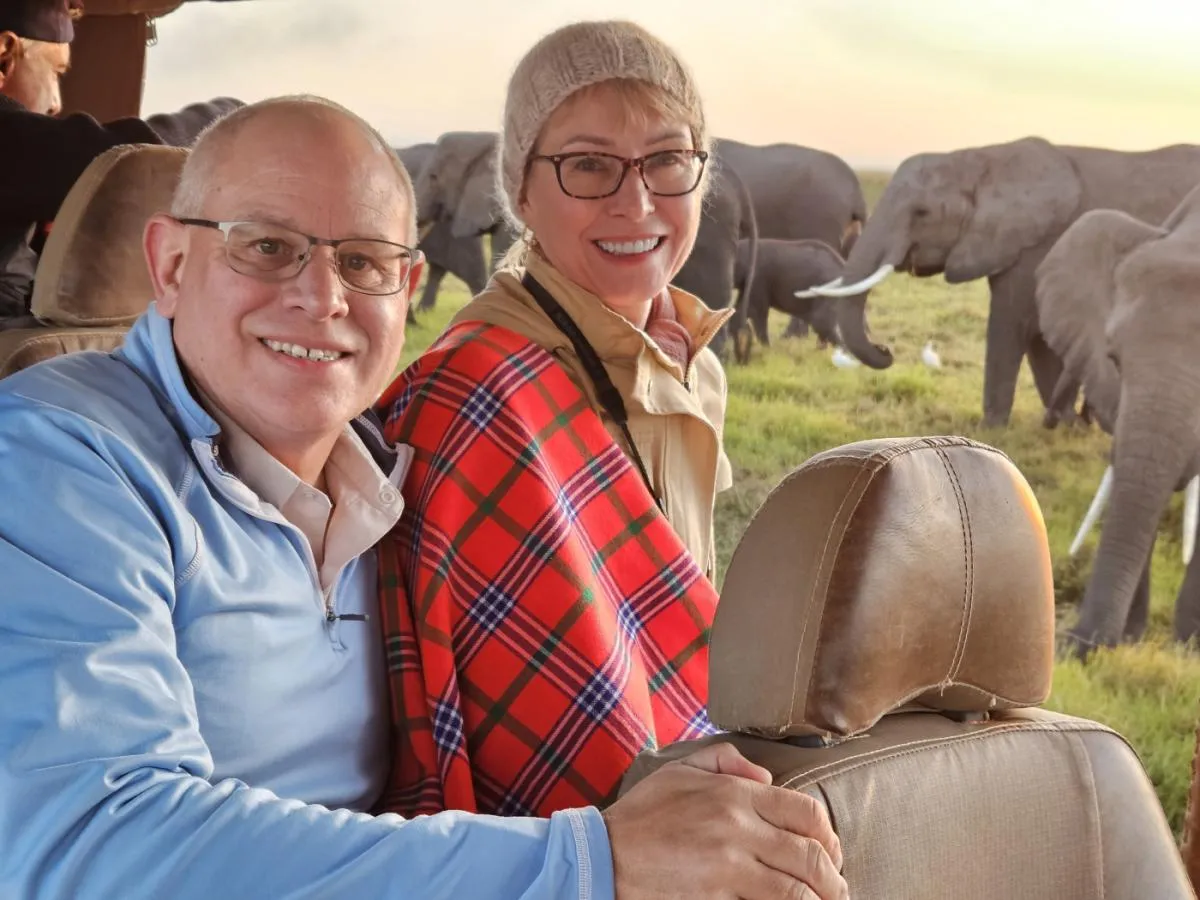
Maria Faires, RD in Amboseli
There is a moment on a game drive — usually just before sunrise, when the air still holds the cold of the night and the grass is lit gold at the edges — when you realize that nothing you have ever done has prepared you for how alive this feels.
I'm Maria Faires, RD — a Registered Dietitian, Fitness Expert, and wildlife traveler who has chased that feeling across the Maasai Mara, through Amboseli, and into the remote Lewa Wilderness Conservancy in Kenya. I came back with a full passport, a changed perspective, and a clear mission: to help other people experience this for themselves, prepared and confident.
My safari content covers the gear I actually used, the packing lists I wish I'd had, and the physical preparation that made the difference between surviving the journey and thriving in it. This is not armchair travel advice. Every recommendation comes from the field.
The wild world is waiting. Let me help you get there ready. Follow me here:
Categories: Where Is Maria Boating and Adventure Travel
Tags: #adventuretravel #kenyasafari